

We believe automated spaces should feel
effortless, whether it's a home, an office, or a retail showroom. Technology
should quietly support how a space is used, not complicate it. That's why
lighting is one of the first things we plan when designing automated
environments. Among modern lighting options, magnetic track lighting stands out
as a smart, flexible, and future-ready choice — and when connected to KNX
automation, it becomes genuinely intelligent rather than just adjustable, in both
residential and commercial settings.
This guide explains how magnetic track lighting works, how
it integrates into KNX automation, and how its application differs between a
home and a commercial space, along with what it costs to install in India.
What is Magnetic Track Lighting?
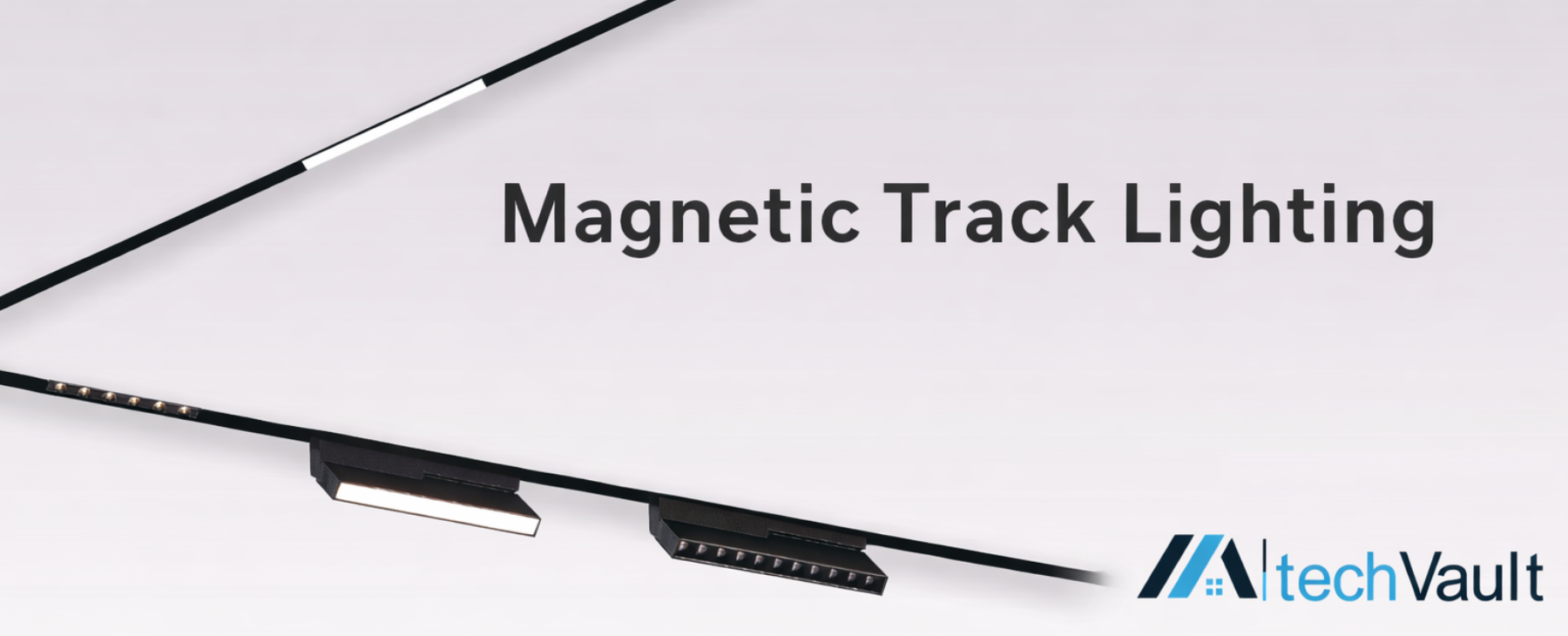
Magnetic track lighting is a modular lighting system where a
slim, low-voltage track is installed on the ceiling, and individual light
fixtures attach to it using magnets. Want to change where the light falls?
Slide or swap the fixture; no drilling, no rewiring, no damage to the ceiling.
Whether it's a living room, bedroom, dining space, or home
office, magnetic track lighting gives you the freedom to adjust lighting as the
space evolves. Furniture moves, room layouts change, and the lighting can move
with them, without calling an electrician for every adjustment.
How Does Magnetic Track Lighting Work With Home Automation?
The real value of magnetic track lighting shows up when it's
connected to a proper automation system. On its own, a magnetic track system
gives you flexible physical placement. Connected to KNX home automation, it adds
intelligent control on top of that flexibility.
At TechVault, we integrate magnetic track lighting into the
same KNX scene logic as the rest of the home, controllable:
- From
an ABB keypad mounted on the wall
- Through
the home automation app on a phone
- With
voice commands via a KNX-IP gateway
With DALI-2 compatible drivers on the track fixtures, each
light point can be dimmed smoothly from 0.1% to 100%, with colour temperature
adjustable from warm to cool, and all of it scheduled or triggered
automatically based on time of day or occupancy.
One Tap, Many Moods — Scene-Based Lighting
With home automation, magnetic track lighting is no longer
just on or off, it becomes part of personalised lighting scenes that match the
rhythm of the day:
- Morning
Mode — bright, energising light (4000K, 80% brightness) to start the
day
- Movie
Mode — soft, dim lighting (2700K, 10% brightness) for a relaxed
viewing atmosphere
- Dinner
Mode — focused warm light over the dining table or kitchen island,
with ambient track lighting dimmed elsewhere in the room
All of it triggered with one tap on a keypad or a single
voice command, no manually adjusting individual fixtures.
Why Is Magnetic Track Lighting Energy-Efficient?
Most magnetic track lighting systems use LED modules, which
means lower power consumption and a significantly longer fixture life than
traditional lighting. Combined with occupancy sensors, scheduled dimming, and
DALI-2 addressable control, energy-efficient magnetic track lighting reduces
electricity usage without compromising on brightness or ambience where it's
actually needed.
Why Designers Like Magnetic Track Lighting
From a design standpoint, magnetic track lighting keeps
ceilings clean and uncluttered — sleek tracks, minimal visible fixtures, and
customisable light modules create a refined, modern look, while KNX scene
control gives precise zone-by-zone control without visible switches or clutter
on the walls.
This is part of why we often specify magnetic track systems
for spaces with frequently changing furniture layouts or art displays —
galleries, open-plan living areas, and home offices where flexibility matters
as much as the lighting quality itself.
How is Magnetic Track Lighting Used in Commercial Spaces?
The same flexibility that makes magnetic track lighting
valuable in homes makes it even more useful in commercial environments, where
layouts change far more often — retail displays get reset for new collections,
office furniture gets reconfigured, and meeting rooms get repurposed.
Common commercial applications:
- Retail
and showrooms: Spotlight modules repositioned along the track to
highlight new product displays without an electrician — relevant for
showrooms, boutiques, and brand experience centres that refresh displays
seasonally
- Office
spaces: Flexible accent lighting over collaborative zones and breakout
areas, with KNX scene control adjusting brightness automatically based on
occupancy sensors as part of broader office automation
- Reception
and lobby areas: Track lighting highlighting feature walls, branding
elements, or seating zones, with scenes that shift the space's character
between daytime business hours and evening events
- Hospitality:
Restaurants and hotel lobbies using track lighting to create distinct
zones — brighter for daytime service, warmer and dimmer for evening
ambience — all scene-controlled rather than manually adjusted fixture by
fixture
Factor |
Residential Use |
Commercial Use |
|
Primary driver |
Lifestyle flexibility, evolving room use |
Frequent layout/display changes, brand refresh cycles |
|
Typical zones |
Living room, home office, gallery wall |
Retail floor, reception, meeting rooms, restaurant seating |
|
Control integration |
KNX scenes tied to daily routines |
KNX scenes tied to occupancy, business hours, events |
|
Scale |
Single rooms, 4-8 modules per track |
Larger runs, often 20-100+ modules across a space |
|
Typical priority |
Ambience and adaptability |
Display flexibility and energy efficiency at scale |
In commercial deployments, the cost-per-point advantage of avoiding electrical rework for every layout change compounds significantly — a retail space that resets its display lighting quarterly saves meaningfully on electrician costs over a magnetic track system's lifespan compared to fixed downlights.
Real Example
For a premium retail showroom project in Noida, we installed
a magnetic track system across the main display floor — over 60 individually
addressable DALI-2 spotlight modules across multiple track runs, integrated
into a KNX-based building
automation system alongside the showroom's ambient lighting and HVAC.
The brief was specific: the display layout would change with
each new collection launch, and the lighting needed to follow without requiring
an electrician on-site each time. Store staff now reposition spotlight modules
along the track themselves for new displays, while the KNX scenes (daytime,
evening, event mode) continue to control the overall ambient lighting and
energy use — a clear example of how the same magnetic track technology serves
very different needs in a commercial environment compared to a home.
What Does Magnetic Track Lighting Cost in India?
Component |
Approx. Cost (Per Unit) |
|
Magnetic track (per metre) |
₹1,500 – ₹4,000 |
|
Standard LED spotlight module |
₹1,200 – ₹3,500 |
|
DALI-2 dimmable module |
₹2,500 – ₹6,000 |
|
Tunable white (colour-changing) module |
₹3,500 – ₹8,000 |
|
KNX integration and scene programming (per zone) |
₹15,000 – ₹40,000 |
For a typical living room with a 4-5 metre track and 6-8
light modules, total cost including KNX integration ranges from approximately
₹60,000 to ₹2,00,000 depending on module selection and dimming requirements.
For commercial deployments — a retail showroom or office
floor with longer track runs and 20-100+ modules — total project cost typically
ranges from ₹5,00,000 to ₹25,00,000+ depending on scale, DALI-2 specification
across all modules, and the depth of KNX/building automation integration. These
figures are indicative estimates — actual pricing depends on track length,
module count, and the level of automation integration.
FAQs
Can magnetic track lighting be installed in an existing home without rewiring?
Yes, for the track and fixtures themselves — magnetic track
lighting requires only a power connection at the track's starting point, not
individual wiring to each fixture. Adding KNX scene control may require
additional cabling depending on whether wireless KNX modules or a wired bus
connection is used.
Is magnetic track lighting only for ceilings, or can it be used on walls?
While ceiling installation is most common for general room
lighting, magnetic track systems can also be installed on walls for accent
lighting on artwork or display shelving, using the same slide-and-attach
mechanism.
How is magnetic track lighting different from a standard fixed downlight layout?
A fixed downlight layout is permanent — once installed, the
light positions cannot change without electrical rework. Magnetic track
lighting allows fixtures to be repositioned along the track at any time, which
is particularly useful in rooms where furniture layout or use changes over
time.
Does magnetic track lighting work with voice assistants?
Yes, when integrated into a KNX system via a KNX-IP gateway,
magnetic track lighting can be controlled through voice assistants alongside
the rest of the home's lighting and automation.
Is magnetic track lighting suitable for a whole home, or just specific rooms?
It works well throughout a home, but it's particularly
valuable in spaces where flexibility matters most — living rooms, home offices,
galleries, and rooms with frequently rearranged furniture. For more static
spaces like bedrooms, a mix of track lighting and fixed cove or recessed
lighting often works best.
Is magnetic track lighting a good fit for commercial spaces like retail or offices?
Yes — commercial spaces often benefit even more than homes,
since layouts and displays change more frequently. Retail showrooms, office
breakout areas, and hospitality spaces commonly use magnetic track systems
specifically because staff can reposition lighting for new layouts without an
electrician, while KNX scenes continue to manage overall ambient lighting and
energy use automatically.
Planning Smart Lighting for Your Home or Commercial Space?
Magnetic track lighting is more than a flexible fixture choice — when properly integrated into a KNX automation system, it becomes lighting that genuinely adapts to how a space is actually used, whether that's a living room, a retail floor, or an office. If you're planning a new home, renovation, or commercial fit-out in Noida, Delhi NCR, or Gurgaon, talk to our team about including magnetic track lighting in your automation brief, or explore our premium switches and lighting and building automation services for more details.